
|
BUYING YOUR KITTEN
Cats as family pets.Cats can bring families together and provide endless laughs and a warm family feeling of completeness. They give love, warmth and a comforting purr when you are feeling low. Often, physicians prescribe the introduction of a pet to people who have high blood pressure and other ailments. Cats are often chosen because of their very clean nature, or because they can be left indoors for longer periods than dogs. They don't dig up the yard, seldom smell, and can pretty much take care of themselves. Cats are intelligent, playful, and yet independent. Cats love being a part of the family and usually make the humans their slaves in a very short time Where will you cat live?Most registered pedigree cat breeders will require that your kitten be an indoor pet. There are many benefits in this. Indoor cats are less independent than outdoor cats, and usually prefer humans as friends. They get fewer medical conditions and injuries and often make better overall pets. On the other side, they demand more of your time, must have their litter boxes cleaned more often, and you are responsible for most of kitty's entertainment. Outdoors cats come and go, usually coming for food and an occasional petting, and then off they go, not to be seen for another day. They fend for themselves and require little of your time. The drawbacks are that neighbours often complain about your cat; you can become responsible for their mischief; and vet bills are higher because of fights and other injuries. Pranks are often carried out on outdoor cats so the chances of mistreatment or death are much greater. Accidents on busy roads are also commonplace. It's hard to make an outdoor cat an indoor cat. It is much harder if you go back and forth. This must be decided when getting your cat and you must stick with your decision. However, if a breeder sells only to indoor homes, you must be truthful about your intentions. Male or Female cat
When bringing a new cat homeChances are kitty first will find its new "safety house". This is important; as this will be your cat's hiding spot when kitty is scared. It usually will be in a cabinet, either in the bathroom or kitchen or under a bed. Once kitty finds the spot, an old towel or shirt that you have worn and that has your scent should be placed into the cabinet for kitty to lie on. If a cabinet becomes that spot, remove any poisons such as cleaners, plant food and bug sprays from that cabinet. Make a point of making sure kitty sees where you put its litter. Cats will remember this very well. Next kitty will find its spot for feeding. Cats like to be fed in the same area. They feel that area belongs to them. Food should be in a clean dish. The same is true with water, Cats drink a lot of water throughout the day and night and it is very important to keep their water fresh and clean. When kitty is ready, it will start exploring its new home. It is important to let kittens explore the area freely. They want to know their surroundings and how secure they feel it is. This also gives them the opportunity to find other secret hiding spots in case their main spot is unavailable. Once he/she is comfortable with the surroundings, the kitten will come to you and begin bonding. Allow it to make the first move. Cats do things ONLY when they are ready. This is the nature of cats. When cats come to you, they are accepting you. Cats do nothing they do not feel like doing. When petting your cat, be gentle; kitty is not an 85-pound dog. When kitty wants to sit on your lap, if you allow it, let the little one jump up and find its comfort spot Your cat has now accepted you, and now OWNS you. If you decide on having an outdoor cat then be a responsible owner. Your outdoor cat will rely on you for its food, health, love and, most of all, safety. Your community requires no litters of unwanted kittens populating the area. What sort of kitten should I buy?
Consider your budget. Some pedigree breeds are very expensive and all are moderately so, but remember that the outlay is far outweighed by the upkeep. It is most likely that there will be more than one breed that will fulfil your requirements and that they will differ in price. What should I expect?
You must be provided with a vaccination certificate signed by a Veterinary Surgeon proving that the kitten has received at least one 3-in-1 (flu and feline enteritis) vaccination. Breeders will use F3 or F4 or F5 vaccinations. You must also receive a Kitten Care Guide Chart, indicating what the kitten eats, when it was last wormed, grooming information, what further vaccinations are due, information on desexing etc., and the breeder's name, phone number, and email address. For a pedigreed cat, you should also receive a copy of the kitten's pedigree or an official registration certificate, including pedigree, from FCCQ Inc. (or another governing body). A kitten purchased for showing/breeding must be registered. You should be clear in your mind at the time of purchase whether the kitten is to be simply a pet or if there is a possibility of it being shown or bred from at a later date. Breeder will always want only a show-quality kitten on the bench under their Prefix, so it is essential that this is discussed if a possibility. A breeder will only sell a breeding cat to another breeder so, unless you are prepared to go through the steps of becoming a Registered Breeder there will be no possibility of changing your mind at a later date and letting "Fluffy" have a litter of kittens. There can be quite a significant price difference between the price of a pet kitten and those sold for other reasons. Many breeders have a Contract that they require the purchaser to sign. These contracts are enforceable by law. If there are to be any restrictions on the use of a breeding cat, or the sale of its progeny for breeding, this will be made quite clear to the buyer at the outset and included in the Contract. Buying a registered kitten does not automatically give you the right to show or breed from it without the breeder's permission.
How can I tell if the kitten is healthy?
|
 If you are thinking of purchasing a kitten, you will hopefully find some useful
information here to guide your decision.
If you are thinking of purchasing a kitten, you will hopefully find some useful
information here to guide your decision.
 Both are great pets but different personalities. Males tend to be more
affectionate and kind, and more willing to share their new home with others,
particularly other females. They have the tendency to be less moody than
females but, unless altered (desexed) at an early age, they can spray the
house, thus marking their territory with a very foul smell. They also become
aggressive in fights. Females can be more moody, attract males if not spayed,
and are more independent, although they also display a lot of affection. Again
both make excellent pets.
Both are great pets but different personalities. Males tend to be more
affectionate and kind, and more willing to share their new home with others,
particularly other females. They have the tendency to be less moody than
females but, unless altered (desexed) at an early age, they can spray the
house, thus marking their territory with a very foul smell. They also become
aggressive in fights. Females can be more moody, attract males if not spayed,
and are more independent, although they also display a lot of affection. Again
both make excellent pets.
 Choosing a breed involves the use of library books, website, and visits to
shows. Of course, you may have a family history of a certain breed, or a friend
with a lovely cat which determines your choice from the outset, though it is
still worth asking whether this breed will fit into your home. If you are
starting from scratch you should look at your own lifestyle and environment. Is
there a lot of space? Is there a large garden? Is the house full of precious
items? Are there young children, a dog, birds or fish? Do you work and, if you
do, is there time to maintain the grooming a longhair cat will need? Is it to
be an indoor or outdoor cat? If you would like it to spend time outdoors, is
the environment safe? All of these will influence your choice of temperament,
even before you choose on appearance.
Choosing a breed involves the use of library books, website, and visits to
shows. Of course, you may have a family history of a certain breed, or a friend
with a lovely cat which determines your choice from the outset, though it is
still worth asking whether this breed will fit into your home. If you are
starting from scratch you should look at your own lifestyle and environment. Is
there a lot of space? Is there a large garden? Is the house full of precious
items? Are there young children, a dog, birds or fish? Do you work and, if you
do, is there time to maintain the grooming a longhair cat will need? Is it to
be an indoor or outdoor cat? If you would like it to spend time outdoors, is
the environment safe? All of these will influence your choice of temperament,
even before you choose on appearance.
 You should look for a healthy, clean, calm kitten that is fully weaned and old
enough to leave home. (FCCQ inc has an age suggestion of a minimum of 10
weeks).
You should look for a healthy, clean, calm kitten that is fully weaned and old
enough to leave home. (FCCQ inc has an age suggestion of a minimum of 10
weeks).
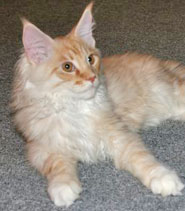
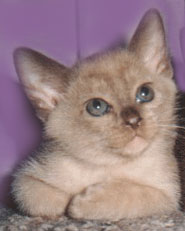 Whether you are buying for showing or for breeding, you need a very thorough
understanding of the Show Standard of your chosen breed. Needless to say you
should be buying the best kitten in the litter, or if the breeder is keeping
the best, the second best. It is most desirable to buy a kitten that is
moderately good overall, with no serious faults, and perhaps one or two really
good features. The kitten must look like a good breed specimen, with balance,
head, body, eyes, coat and colour well within the breed specifications laid
down for the breed. The breeder should be anxious to ensure you have the best
kitten to represent their breeding to the broader Cat Fancy.
Whether you are buying for showing or for breeding, you need a very thorough
understanding of the Show Standard of your chosen breed. Needless to say you
should be buying the best kitten in the litter, or if the breeder is keeping
the best, the second best. It is most desirable to buy a kitten that is
moderately good overall, with no serious faults, and perhaps one or two really
good features. The kitten must look like a good breed specimen, with balance,
head, body, eyes, coat and colour well within the breed specifications laid
down for the breed. The breeder should be anxious to ensure you have the best
kitten to represent their breeding to the broader Cat Fancy.